
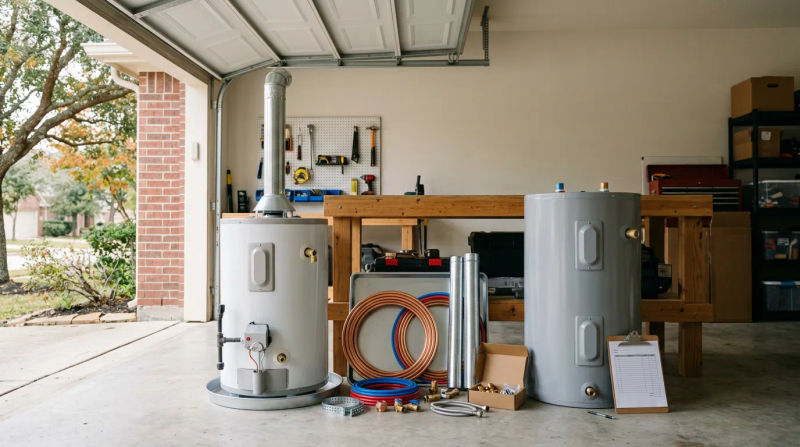
As a Senior Home Services Technician with over a dozen years in the field, I can tell you that a failing water heater is one of the most common calls we get. It’s an appliance we all take for granted until that morning shower turns ice-cold. When it happens, the first question on every homeowner's mind is, "What is this going to cost?" Especially as the cooler mornings arrive here in Rosenberg, the need for reliable hot water becomes urgent. My goal here is to give you a transparent, no-nonsense guide to understanding the real water heater cost so you can budget accordingly and make a smart investment in your home.
Average Costs in Rosenberg
It’s important to start with realistic numbers. While every job is unique, we can provide a general price range based on the hundreds of installations our crews perform. The Rosenberg water heater replacement price typically falls into two main categories: electric and gas.
- Electric Water Heater Replacement: For a standard 40 or 50-gallon tank-style electric water heater, homeowners in Rosenberg can typically expect to pay between $1,200 and $2,500. This range generally includes the new unit, professional installation labor, necessary parts like connectors and valves, and disposal of your old tank.
- Gas Water Heater Replacement: Gas models are often a bit more complex. The average gas water heater install cost Rosenberg residents see is usually between $1,500 and $3,500. The higher cost is due to the added complexity of managing gas lines, ensuring proper ventilation, and meeting specific safety codes related to combustion.
These are all-in price ranges for a straightforward replacement. However, as you'll see, several factors can shift your final cost to the lower or higher end of these estimates.
Factors That Affect Price
No two homes in Rosenberg are exactly alike, especially when you consider the mix of historic pre-1940s bungalows and newer constructions. From my experience on job sites, these are the key variables that determine the final price.
1. Unit Type and Size (Gas vs. Electric) As noted above, gas heaters cost more upfront due to the venting and gas plumbing requirements. Beyond that, the size of the tank matters. A 50-gallon tank will cost more than a 40-gallon tank, and a larger 75-gallon unit for a big family will cost more still. It's crucial to size the unit correctly for your household's needs to avoid running out of hot water or paying to heat water you don't use.
2. Location and Accessibility A water heater tucked into a spacious garage corner is the easiest (and therefore least expensive) to replace. If your unit is in a tight closet, a cramped attic, or a hard-to-access crawlspace under an older pier and beam home, the labor time increases significantly. Our technicians need more time to safely remove the old unit and maneuver the new one into place without damaging your property.
3. Code Upgrades and Permits This is a big one, especially in older homes. Building codes are updated regularly to improve safety. If your old water heater was installed 10-15 years ago, the new installation will need to be brought up to current code. This is not optional; it’s for your family’s safety. Common code-required upgrades include:
- Thermal Expansion Tank: Prevents pressure buildup in a closed plumbing system.
- New Shut-Off Valves: Modern ball valves are often required to replace old, unreliable gate valves.
- Drip Pan and Drain Line: A pan underneath the heater with a drain line to the exterior can prevent major water damage if the tank leaks.
- Proper Venting: For gas heaters, ensuring the vent pipe (flue) has the correct slope, material, and clearance from combustible materials is critical to prevent carbon monoxide backdrafts.
Regarding electric water heater permits Texas, most municipalities, including Rosenberg, require a permit for a water heater replacement. This ensures a third-party inspector verifies the work was done safely and to code. A professional contractor will handle the permitting process for you.
4. Existing Plumbing and Electrical In many of Rosenberg's beautiful pre-1940s homes, we sometimes find galvanized plumbing or outdated electrical wiring. If water or gas lines need to be re-routed or a new electrical circuit is required to support the new unit, this will add to the project's scope and cost. Our organized workflow involves assessing these systems first to provide a clear and comprehensive quote.
How to Get the Best Value
Getting the best value doesn't just mean finding the lowest price. A shoddy installation can lead to leaks, inefficient performance, or even dangerous conditions. Here’s how to make a smart decision.
- Focus on All-In Cost, Not Just the Unit Price: A low-ball offer might not include necessary code upgrades, permit fees, or disposal of the old unit. Always ask for a detailed, itemized quote that breaks down all costs. This allows you to compare different bids fairly.
- Consider Long-Term Efficiency: Look for the unit's Uniform Energy Factor (UEF) rating. A model with a higher UEF rating might cost a little more upfront but can save you hundreds of dollars on your utility bills over its lifespan.
- Hire a Licensed and Insured Professional: A licensed plumber or technician understands local codes and has the experience to handle unexpected challenges. Their work is insured, protecting you and your home. Our trained crews follow standardized processes to ensure every installation is safe, reliable, and up to code.
- Ask About Warranties: A quality installation should come with a warranty on both the equipment (from the manufacturer) and the labor (from the contractor).
Questions to Ask Your Contractor
Before you hire anyone, arm yourself with the right questions. This helps you vet their expertise and ensures there are no surprises.
- Is your quote comprehensive, including the unit, labor, all necessary parts, permit fees, and disposal?
- Are your technicians licensed, insured, and background-checked?
- What are the warranty terms for the water heater and for your installation labor?
- Will you be pulling the required city permits for this installation?
- Based on my home's age and current setup, what specific code upgrades do you anticipate?
- How long do you expect the installation to take, and what steps will you take to protect my home during the process?
Understanding the water heater cost is about more than just a single number. It’s about knowing what factors influence that price and ensuring you’re paying for a safe, reliable, and code-compliant installation that will serve your family for years. A professional contractor should be happy to walk you through every line item and answer all your questions.
For a personalized estimate in Rosenberg, contact Ultimum Home Services for a free consultation. We can provide an itemized quote that separates equipment, labor, and permit costs so you can plan your budget with confidence.