
You walk into your kitchen to grab a glass of water and notice something odd - a single tile near the island feels warm under your feet. At first, you dismiss it. But the next day, it’s still there. Then you notice a faint, musty smell you can’t quite place. In a community like Fulshear, where many of our beautiful, modern homes are built on concrete slab foundations, these subtle clues can be the first whispers of a significant problem brewing right under your feet: a slab leak.
A slab leak is a leak in one of the water lines - either hot or cold - that runs beneath the concrete foundation of your home. Because it’s hidden from view, it can go undetected for weeks or even months, silently causing damage. As a technician with over a decade of experience in Houston-area homes, I’ve seen firsthand how a small, unnoticed drip can escalate into a major structural and financial headache. Understanding the early warnings is the best defense for any homeowner.
Common Signs and Symptoms
Detecting a slab leak early is all about paying attention to small changes in your home. Our trained crews know that these issues rarely announce themselves loudly. Instead, you need to look for a collection of subtle clues. As we move into October, the cooler, drier air can actually make some of these signs, like odd smells or humidity changes, easier to notice.
Here are the most common slab leak signs to watch for:
- A Hot Spot on the Floor: This is one of the most classic indicators, especially for a hot water line leak. If you find a hot spot on floor Fulshear homes, whether on tile, wood, or even carpet, it’s a red flag. The heat from the leaking water transfers through the concrete and into your flooring. This is often more noticeable in the fall and winter when your home's HVAC isn't running as much.
- The Sound of Running Water: Do you hear water running even when all faucets, toilets, and appliances are turned off? Put your ear to the floor in different areas. A faint hissing or rushing sound could be the water escaping a pipe under the slab.
- An Unexplained Spike in Your Water Bill: A sudden, significant increase in your water bill without a corresponding change in your habits is a strong indicator of a leak somewhere in your system. A slab leak is a common culprit because it runs 24/7.
- Low Water Pressure: A low water pressure slab leak occurs when the break in the pipe is large enough to divert a significant amount of water, reducing the pressure available at your faucets and showerheads. If you notice a sudden drop in pressure throughout the house, it warrants an immediate investigation.
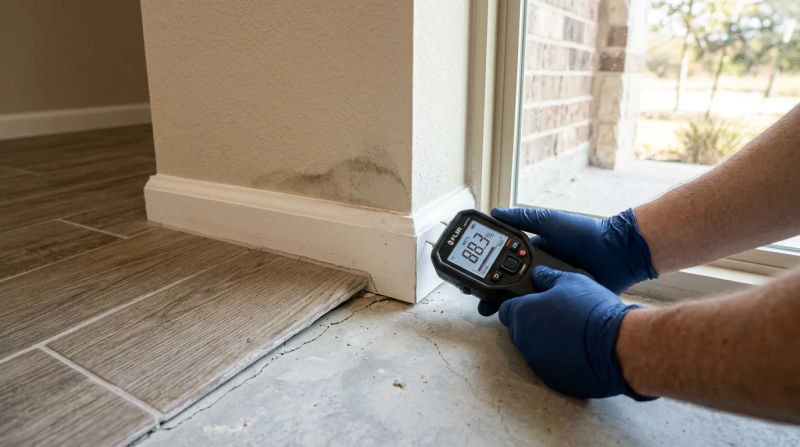
- Visible Moisture or Damage: Look for damp spots on carpets, water seeping out from under baseboards, or warping in your hardwood floors. In the large, open-concept homes common in Fulshear's newer neighborhoods, you might first see this along the perimeter of a kitchen or a downstairs bathroom.
- Musty Odors or Mold Growth: Persistent moisture from a leak creates the perfect environment for mold and mildew to grow under your flooring and behind your walls. This can produce a musty smell that seems to have no source.
What Causes This Problem
Slab leaks don't just happen randomly; they are typically the result of specific conditions interacting with your home's plumbing. While the homes in the Fulshear area are predominantly from the 2010s and newer, even modern materials aren't immune to problems if the conditions are right.
One of the primary causes is pipe corrosion. Over time, the chemical composition of the water and the pipe material can interact, causing the pipe to deteriorate from the inside out. Eventually, a pinhole leak forms and grows.
Another common cause is abrasion. As hot water pipes expand and cold water pipes contract, they can move slightly. If a pipe was installed in direct contact with concrete, rebar, or sharp gravel without proper protective sleeving, this constant, subtle movement can eventually wear a hole in the pipe wall.
Ground shifting is also a major factor in our region. The expansive clay soil prevalent around Houston swells when wet and shrinks when dry. This movement puts immense stress on the rigid pipes buried beneath the foundation, potentially causing them to bend, crack, or break.
Finally, poor initial installation can set the stage for future problems. Kinked lines, improperly joined pipes, or low-quality materials can create weak points that are destined to fail under pressure. This is why our technicians emphasize standardized processes and following code-conscious solutions - to ensure the job is done right the first time and prevent these issues down the road.
When to Call a Professional
If you suspect a slab leak, this is not a situation for a DIY approach. The complexity and potential for causing more damage are simply too high. The leak is hidden beneath several inches of concrete, and finding it requires specialized expertise and equipment.
Attempting to locate the leak by breaking up the floor is an outdated, destructive, and costly method. Experienced professionals use non-invasive Fulshear slab leak detection techniques to pinpoint the exact location of the break before any demolition begins. Our teams utilize a combination of advanced tools:
- Acoustic Listening Devices: These highly sensitive microphones can detect the specific sound frequency of water escaping a pressurized pipe under the slab.
- Thermal Imaging Cameras: For hot water line leaks, these cameras can see the heat signature on the floor, mapping out the path of the leak with remarkable accuracy.
- Line Tracing and Pressure Testing: We can isolate different sections of your plumbing and test them for pressure drops to confirm which line is compromised.
Once the leak is precisely located, a qualified professional can present you with the best repair options. This may involve making a small, targeted opening in the slab to repair the single spot, or in cases of older or extensively damaged piping, it might involve re-routing the line overhead. An organized workflow ensures the process is as efficient and minimally disruptive as possible.
Trying to guess the location can lead to unnecessary destruction of your floors, costing you thousands more in repairs. Relying on an experienced crew with the right tools ensures the problem is solved correctly and efficiently.
A Proactive Approach is Key
Slab leaks are a serious issue that can compromise your home's foundation and lead to extensive water damage and mold. The key takeaways are to be vigilant for the early slab leak signs: an unexplained hot spot on floor Fulshear, a sudden drop in water pressure, the sound of running water, or a surprising water bill. These are your home's way of telling you something is wrong.
Especially in Fulshear, where slab-on-grade foundations are the standard for our beautiful modern homes, awareness is your best tool. Don't wait for a small sign to become a big problem. Addressing a suspected leak early can save you from far more costly and disruptive repairs later on.
If you notice any of these signs, contact a local general contractor for a professional inspection. An expert diagnosis is the first step toward protecting your home and your peace of mind.