
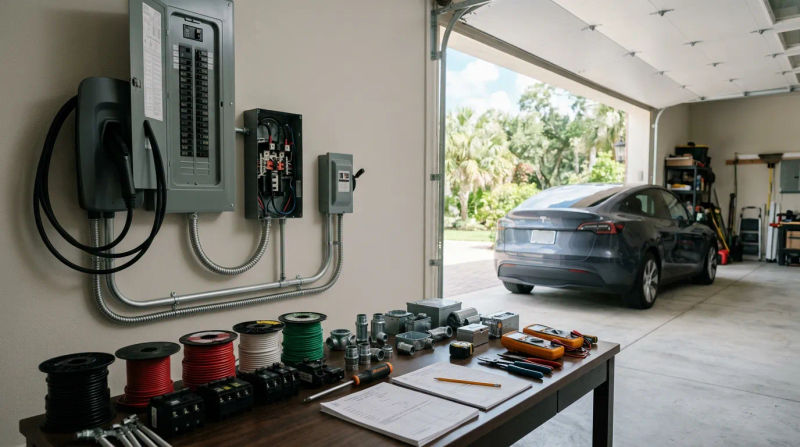
As an electrician with over a decade of experience in the Houston area, I know that when homeowners decide to buy an electric vehicle, their very next question is almost always about the cost of installing a home charger. It’s a major concern, and rightly so. You want to make sure the job is done safely and correctly without breaking the budget. My goal here is to give you a transparent, jobsite-tested guide to understanding the real EV charger installation cost in Houston, so you can plan accordingly.
With the summer driving season behind us and holiday travel on the horizon, September is a peak time for these installations. Let's break down what you can expect to pay and what factors drive that price.
Average Costs in Houston
First, it’s important to distinguish between the charger itself and the installation. The Level 2 charger unit can cost anywhere from $300 to $700+, depending on brand, amperage, and features like Wi-Fi connectivity. The installation cost is separate and covers the labor, materials like wiring and breakers, and permits.
For a professional installation in the Houston area, you can generally expect the cost to fall within this range:
- Straightforward Installation: $800 - $1,400
This scenario is the ideal. It typically means your home's main electrical panel is located in the garage, has sufficient capacity, and the desired charger location is on the same wall or very close by. The job involves adding a new 240-volt dedicated circuit, running a short length of wire in conduit, and installing the outlet or hardwiring the charger. This is the most common price range for the basic 240V outlet for EV charger cost.
- Moderately Complex Installation: $1,400 - $2,500
This is a more common situation, especially in the sprawling homes around Houston. This price range accounts for installations where the electrical panel is on the opposite side of the house from the garage. This requires a much longer wire run through an attic, crawlspace, or along an exterior wall in conduit. It involves more labor and significantly more material (copper wire is a major cost driver).
- Complex Installation: $2,500+
A complex job involves significant electrical system upgrades. The most common reason for this is an electrical panel that lacks the capacity for the new EV charger circuit. Many homes, particularly those built in the 1980s like you see in neighborhoods around Spring, may have older 100A or 150A panels that are already maxed out. A full panel upgrade can add $2,000 to $4,000 or more to the total project cost. This category also includes jobs requiring extensive trenching to a detached garage or navigating very difficult wiring paths.
Factors That Affect Price
The final price on your quote is determined by a few key variables. When our technicians assess a home, these are the primary factors we are evaluating to provide an accurate, itemized estimate.
1. Your Electrical Panel's Capacity & Age This is the single biggest factor. An EV charger is a continuous, heavy load. We must perform a "load calculation" to ensure your panel can handle it safely. Homes from the 1970s and 1980s often have panels that are at or near their limit. If there isn't enough capacity, a panel upgrade is required by code. This isn't an upsell; it's a critical safety measure to prevent overloads and fire hazards.
2. Distance from Panel to Charger The longer the distance, the more expensive the installation. This is due to two things: the cost of the heavy-gauge copper wire and the labor required to run it. In many Houston-area homes with front-facing or detached garages, the main panel is often located at the back or side of the house, leading to wire runs of 50, 75, or even 100+ feet. This directly impacts the final EV charger installation cost.
3. The Level 2 Charger Permit Houston Process Yes, a permit is required for this work in Houston and its surrounding municipalities. While the city's permit fee itself might only be $50-$150, the cost on your invoice also covers the electrician's time to prepare the paperwork, submit it, and coordinate with the city inspector. A reputable EV charger electrician Houston will always insist on pulling a permit. It’s your guarantee that the work is inspected and verified to meet all current electrical codes, which is essential for your safety and your homeowner's insurance.
4. Installation Complexity and Materials
- Hardwired vs. Outlet: Some chargers are designed to be hardwired directly to the circuit, while others plug into a 240V outlet (like a NEMA 14-50). The cost difference is usually minimal, but the choice may be dictated by the charger manufacturer's specifications.
- Conduit and Trenching: If the wire has to run on the exterior of your home, it must be protected in a durable conduit. If it needs to go underground to a detached garage, that requires trenching, which adds significant labor.
- Wall Materials: Drilling through the brick exteriors common on 1980s Neo-eclectic homes takes more time and specialized tools than running a wire through drywall in the garage.
How to Get the Best Value
Getting the "best value" isn't about finding the cheapest price; it's about getting a safe, reliable installation that will last for years without issues. Cutting corners on electrical work is a risk you don't want to take.
- Hire a Licensed Professional: This is non-negotiable. An unlicensed handyman might offer a lower price, but they won't pull a permit, may use undersized wire, and won't have the insurance to cover any potential damage. A qualified electrician ensures the job is done right the first time.
- Get an Itemized Quote: Ask for a quote that breaks down the costs for labor, materials, and permits. This transparency helps you understand exactly what you're paying for.
- Plan Your Charger Location: During your consultation, discuss the most efficient location. Sometimes moving the charger location by a few feet can save you hundreds of dollars by shortening the wire run.
- Think Long-Term: A proper installation protects your expensive EV, your home, and your family. The organized workflows and standardized processes used by our trained crews at Ultimum Home Services are designed to ensure every installation meets the highest safety and quality standards. This reliability is worth the investment.
Questions to Ask Your Contractor
Before you hire anyone, be prepared with these questions to vet their qualifications and process:
- Are you a licensed and insured electrician in Texas?
- Will you be pulling a permit for this installation, and is the cost included in the quote?
- Does your quote detail all costs, including the permit, wire, breaker, and labor?
- Will you perform a load calculation on my main panel to confirm it has sufficient capacity?
- What is your warranty on the workmanship and materials?
- Can you explain why you chose a specific wire gauge and breaker size for my installation?
An experienced professional will be able to answer these questions confidently and clearly.
Installing a Level 2 charger is a fantastic upgrade for any EV owner, providing faster charging and ultimate convenience. While the cost can vary, understanding the factors involved empowers you to budget effectively and choose the right contractor for the job. From my years in the field, I can assure you that investing in a safe, code-compliant installation is the most important decision you'll make in this process.
For a personalized, itemized estimate for your home in the Houston area, contact Ultimum Home Services for a free consultation.