
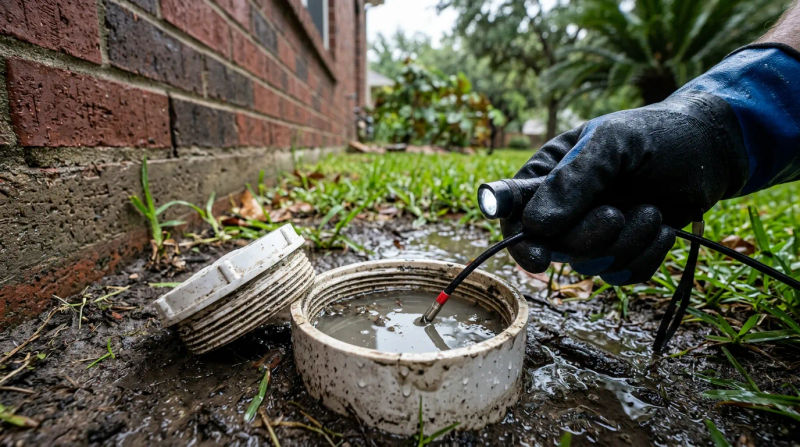
You’ve just finished cleaning up after dinner, and as a heavy September thunderstorm rolls through Houston, you hear it - a strange gurgling sound coming from the kitchen sink drain. A little later, you flush an upstairs toilet and notice bubbles coming up in the downstairs shower drain. These aren't just quirky house noises; they are often the first subtle whispers of a much larger problem brewing underground: a main sewer line clog.
As a technician with over a dozen years in the field, I’ve seen firsthand how a small drainage issue can escalate into a full-blown sewer line backup, causing significant damage and disruption. Especially here in Houston, where our flat terrain and intense rainfall can put immense pressure on plumbing systems, recognizing the early warnings is critical. Understanding these signs can be the difference between a straightforward repair and a costly, hazardous cleanup.
Common Signs and Symptoms
Your home's plumbing system is designed to work silently in the background. When it starts making noise or acting up, it's sending a clear signal. Here are the seven most common signs that your main sewer line is developing a clog.
- Multiple Drains are Slow or Clogged: A single slow drain, like a bathroom sink, often points to a localized clog in that specific fixture's P-trap. However, if you notice the toilet, shower, and sink in one bathroom are all draining slowly, the problem is likely further down the line in your main sewer pipe.
- Gurgling Drains: That gurgling sound you hear from drains or toilets is the sound of trapped air being displaced by wastewater struggling to get past an obstruction. You might notice gurgling drains after rain Houston storms, as the excess water entering the municipal system creates backpressure. This is a classic early warning sign.
- Water Backing Up in Unusual Places: This is one of the most definitive signs. When you use one fixture, water comes up in another. For example, a toilet bubbling when shower runs or water from a running washing machine backing up into a first-floor bathtub. This happens because the wastewater has nowhere to go and follows the path of least resistance back up into the lowest open drain.
- A Persistent Sewer Smell in the House: You should never smell raw sewage inside or around your home. If you notice a sewer smell in house Houston properties, it could indicate a crack in your sewer line or a blockage that is allowing sewer gas to vent into your living space. This isn't just unpleasant; it can be a health hazard.
- Changes in Your Lawn: Have you noticed a patch of grass over your sewer line that is suddenly lush, green, and growing much faster than the rest of the yard? This can be a sign of a leak in the line, which is fertilizing the soil with nutrient-rich wastewater. You might also see a persistent soggy spot or indentation in the yard.
- Frequent Clogs: If you find yourself constantly battling clogs in the same fixtures, especially toilets, it suggests the underlying problem isn’t being resolved. The issue may not be the toilet itself, but a partial blockage in the main line that repeatedly causes backups.
- Issues When Flushing the Toilet: If flushing a toilet causes water to rise in or drain from a nearby tub or shower, it's a clear indication that the main line is obstructed. The large volume of water from a toilet flush can't pass the clog, so it pushes back into other branch lines.
What Causes This Problem
Understanding the root cause of a sewer line issue is the first step our technicians take toward a reliable, long-term solution. A simple clog is just a symptom; the real problem is what allowed it to form. Here are the most common culprits we encounter.
- Tree Root Intrusion: This is, by far, one of the most common causes of a sewer line backup. Tree roots are naturally drawn to the water and nutrients inside your sewer pipes. They can infiltrate tiny cracks or joint separations, growing into a dense mat that catches debris and eventually chokes off the pipe entirely. Homes built in the 1980s, like many of the large two-story brick homes in neighborhoods like Atascocita, often have mature trees and original sewer lines that are now at an age where they are highly susceptible to root intrusion.
- Grease, Fats, and Oils: Pouring cooking grease down the drain is a primary contributor to clogs. It may be liquid when it's hot, but it solidifies as it cools, coating the inside of your pipes. Over time, this sticky layer catches other debris (food particles, hair, etc.), creating a stubborn blockage.
- Sagging or "Bellied" Pipes: Houston's shifting soil can cause sections of your sewer line to sink, creating a low spot or