
That sudden quiet after a heavy Atascocita downpour can be peaceful, but not when it's accompanied by a section of your house going dark. You walk over to the electrical panel, find the tripped switch, and flip it back on. For a moment, all is well. But then, minutes or hours later, it clicks off again. If you've found yourself in this frustrating cycle, where a breaker keeps tripping every time there's significant rain, you're not alone. This is a common issue, and it's your home's electrical system telling you that something is wrong.
As a Senior Home Services Technician with over a dozen years in the field, I've seen this scenario play out countless times. A persistent breaker trips after rain Atascocita homeowners experience is almost always caused by one thing: moisture getting somewhere it doesn't belong. Let's walk through the common signs, the underlying causes our crews typically find, and when it's time to call for professional help.
Common Signs and Symptoms
The most obvious symptom is a circuit breaker that trips and refuses to stay reset during or immediately after a rainstorm. However, there are other clues that can help you and a technician narrow down the source of the problem:
- It's a Specific Circuit: The trip is usually not random. It’s often the same breaker every time - typically one that powers outdoor elements like patio outlets, landscape lighting, a pool pump, or your garage.
- GFCI Outlets Won't Reset: You may find that an outdoor outlet keeps tripping GFCI protection. These outlets, identifiable by their "TEST" and "RESET" buttons, are designed to shut off instantly when they detect a ground fault, which is exactly what happens when water creates an improper electrical path.
- Flickering Lights: Before the breaker trips for good, you might notice lights on the circuit flickering or dimming as the rain begins. This indicates an unstable connection or a partial short circuit developing.
- The Problem Vanishes When It's Dry: The circuit works perfectly fine on sunny days, leading many to dismiss the issue. However, the underlying vulnerability remains, waiting for the next storm.
What Causes This Problem
Water is relentless, and it can find its way into your electrical system through surprisingly small openings. Here are the seven most common reasons our technicians discover when diagnosing rain-related electrical trips.
- Compromised Outdoor Outlets: This is the number one cause. Over time, the protective covers on exterior outlets degrade from sun and weather. Gaskets dry out and crack, the spring-loaded doors break, or bubble-style "in-use" covers are left open. Rainwater then splashes directly into the receptacle, causing an immediate fault.
- Leaky Exterior Light Fixtures: Porch lights, security floodlights, and decorative wall sconces all have seals to keep water out. When these seals fail, water can seep into the fixture's electrical box, making contact with the hot and neutral wires and tripping the breaker.
- Water in Underground Electrical Conduit: Many larger properties, like the expansive 1980s-era homes common in Atascocita, use underground conduit to run power to detached garages, landscape lighting, or gate openers. If this PVC or metal pipe cracks from shifting soil or root intrusion, it can fill up with groundwater. Clear water in electrical conduit signs include moisture or even standing water inside the connected outlet boxes.
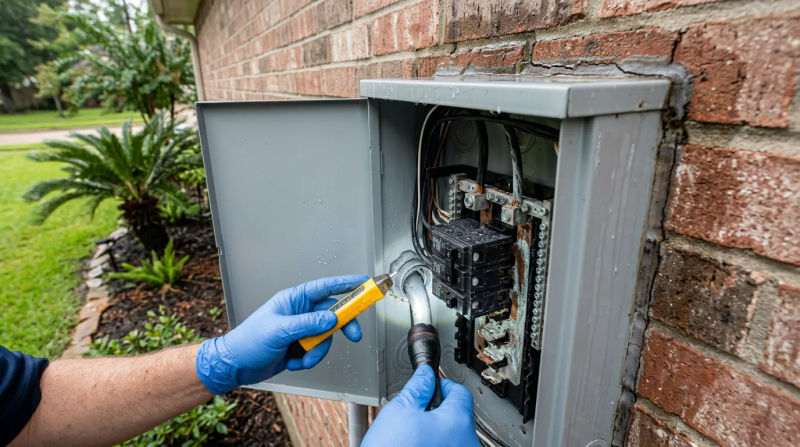
- A Damaged Service Entrance Cable: The thick, heavy-duty cable running from the utility line to your meter and into the main panel is your home's electrical lifeline. If its protective sheathing gets damaged by tree branches, squirrels, or simple UV degradation, it can act like a funnel. Water enters the cable and can travel all the way down into your main breaker panel - a very dangerous situation.
- Roof, Siding, or Window Leaks: The problem isn't always with an outdoor component. A leak from the roof, a window frame, or a siding penetration can allow water to trickle down an interior wall cavity. If this water drips onto the back of an indoor outlet or into a hidden junction box, it will cause a short circuit. The complex, multi-gabled rooflines on many 1980s Atascocita homes, while beautiful, present numerous valleys and flashing points that can become sources of leaks over time.
- Condensation in Enclosures: The high humidity in our area, especially after a storm, can be an invisible culprit. Warm, moist air can infiltrate cooler electrical enclosures like your main panel, an outdoor sub-panel for a pool, or a junction box. When the temperature drops, that moisture condenses directly onto circuits and bus bars, which can be enough to cause a trip.
- A Faulty or Overly Sensitive Breaker: Sometimes, the protective device is the problem. GFCI and their modern cousin, AFCI (Arc Fault Circuit Interrupter) breakers, are complex electronic devices. With age, they can fail or become too sensitive, tripping from minute voltage fluctuations or humidity levels that a healthy breaker would ignore. In these cases, the rain is just a contributing factor to an already failing component.
When to Call a Professional
Navigating electrical issues requires a serious focus on safety. There are a few things you can check, but most rain-related trips require an expert.
- Safe to Check: If a breaker trips, you can try to reset it one time. First, unplug all appliances and lamps on that circuit to ensure an overloaded device isn't the cause. If a GFCI outlet tripped, you can try pressing its "RESET" button, but only if the outlet is completely dry.
- Time for a Pro: You should call for professional help immediately if:
- The breaker trips again right after you reset it.
- You see any evidence of water, rust, or corrosion inside your main electrical panel. Do not touch anything inside the panel.
- The problem persists with every rainfall.
- You smell burning plastic or hear sizzling or buzzing sounds from an outlet or the panel.
Our experienced technicians use a standardized, systematic process and specialized diagnostic tools to safely trace the path of moisture intrusion. Guesswork with electrical systems is dangerous; a trained professional can pinpoint the exact location of the fault and perform a lasting, code-compliant repair.
Conclusion
A circuit breaker that trips when it rains is your home's safety system working correctly to prevent a more dangerous situation. It's a clear signal that there's a breach somewhere allowing moisture to compromise your wiring. Ignoring it can lead to worsening corrosion, permanent damage to your electrical system, and an ongoing risk of shock or fire.
By understanding the potential causes, from a worn-out outlet cover to a hidden leak, you can appreciate the importance of a swift and professional diagnosis. Don't wait for the problem to get worse.
If you notice any of these signs, contact a local General Contractor professional for an inspection.